MINERALS OF THE REPUBLIC OF SOUTH SUDAN| COPPER AND OTHER METALS | 2012
The Republic of South Sudan has taken the decision to diversify its resources of external revenue. Whereas petroleum is at present the single -most important commodityin the extractive industries sector in South Sudan, accounting for over 90% of revenue, there is a convincing case to be made for targeted support to the high-potential mining and minerals sector. Although almost completely unexplored, the territory is considered to be possess likely significant mineral resources. By developing the minerals sector in a controlled and sustainable manner, it can play an important role in helping to create employment opportunities and support economic and social development in the country. In order to attract private sector investment there is an immediate need to provide the appropriate environment and with this in mind the Government of South Sudan has initiated the process by introducing a new Mining Act to promote the exploration, development, production and utilisation of South Sudan's mineral wealth. Another important part of this process is to provide potential investors with the available information on the mineral resources of the country.
MINERALS OF THE REPUBLIC OF SOUTH SUDAN| GOLD & NON-METALS | 2012
The Republic of South Sudan has taken the decision to diversify its resources of external revenue. Whereas petroleum is at present the single -most important commodityin the extractive industries sector in South Sudan, accounting for over 90% of revenue, there is a convincing case to be made for targeted support to the high-potential mining and minerals sector. Although almost completely unexplored, the territory is considered to be possess likely significant mineral resources. By developing the minerals sector in a controlled and sustainable manner, it can play an important role in helping to create employment opportunities and support economic and social development in the country. In order to attract private sector investment there is an immediate need to provide the appropriate environment and with this in mind the Government of South Sudan has initiated the process by introducing a new Mining Act to promote the exploration, development, production and utilisation of South Sudan's mineral wealth. Another important part of this process is to provide potential investors with the available information on the mineral resources of the country.
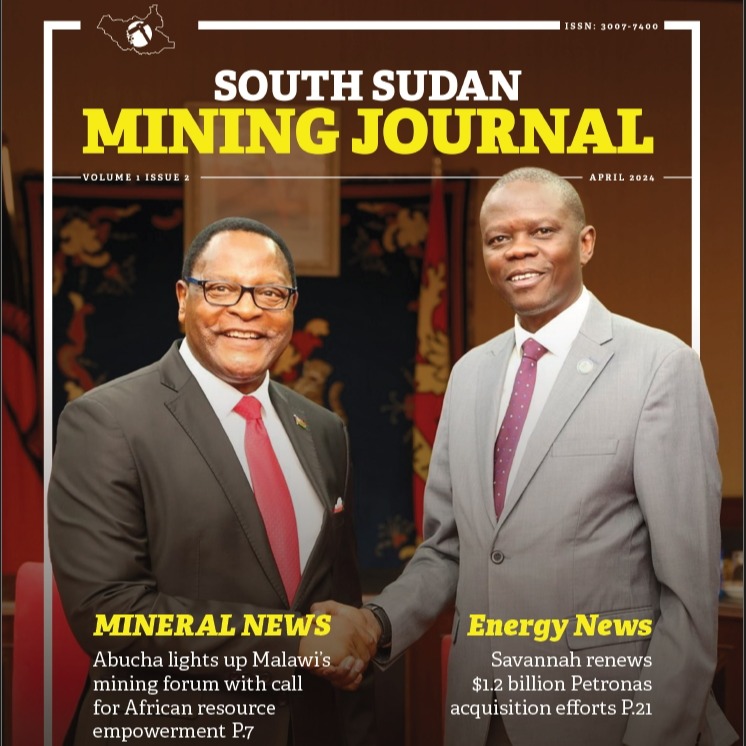
Table of Content 4 Small-scale mining An Entrepreneurial Approach 7 Abucha lights up Malawi’s mining forum with call for African resource empowerment 9 Barnaba Bak Chol: Former finance minister’s legacy and advise to successor Awow Daniel 11 Energy, mining to feature at the South Sudan Global Partnership Summit 12 Gov’t develops comprehensive investment guidebook 13 Navigating environmental concerns 15 Paloch road construction project stagnates almost one year on 16 Kapoeta Portland Cement project takes shape as contractor identifies factory establishment site 18 Land acquisition technicalities curtail geological lab establishment 19 Reprieve for indigenous miners as gov’t establishes marketing stations 20 Juba, Beijing reiterate commitments to implement a geological survey agreement 21 Savannah renews $1.2 billion Petronas acquisition efforts 24 Parliament reopens with calls for mining sector’s revamps 25 Gov’t boosts oil sector with new exploration and production sharing agreement (EPSA) 27 Is South Sudan headed for an alternative oil transit route sooner than expected? 28 Government explores options to diversify economy as oil disruption persists 30 CEBU, Jakama Engineering sign investment MoU in Tanzania 31 Ruweng calls for urgent release of “forgotten” environment audit reports 33 Lawmaker welcomes appointment to chair Specialised Committee on Petroleum 34 Opportunities and challenges: South Sudan artisanal gold mining 36 Djibouti pushes for fasttracked transport initiative implementations 37 Gov’t loses $10 million in revenue to land mismanagements 38 Juba, Khartoum join efforts to repair oil pipeline, restore operations 39 Parliament throws weight behind Ruweng amid alarming birth defects 40 Resource-induced land tension blemishes oilproducing areas 42 South Sudan gains recognition at Canada’s premier mining convention 43 Transforming Communities: Ruweng’s 3% oil share ignites local progress 46 Clean-up of mining generated environmental waste in South Sudan using livestock excreta
A REPORT ON A RECONNAISSANCE GEOLOGICAL FIELD TRIP TO KARPETO ARTISANAL MINING AREA | 2015
The Directorate of Geological Survey organized a reconnaissance geological field trip to Greater Karpeto Boma, Lobonok Payam which took 4 days starting from 14-17 April , 2015. this team of 16 people was headed by the undersecretary for mining and comprises of Professional Geologist, Field Technicians and Support Staff.
MINING IN SOUTH SUDAN: OPPORTUNITIES AND RISKS FOR LOCAL COMMUNITIES| Cordaid | 2016
South Sudan is known as an important oil producer but the country is also believed to have significant mineral resources, though very little formal exploration has been carried out since the Second World War. The government is extremely interested in, and active in, promoting investment in exploration and the development of mining projects. According to all mining communities met as part of this research as well as the geologists who were part of the team, artisanal and small-scale gold mining in South Sudan dates back to colonial times. Artisanal gold mining, and also smallscale mining using some machinery, takes place in a number of areas spreading from Western Bahr el-Ghazal (WBeG), Western Equatoria State (WES), CES and EES to Jonglei and even Upper Nile State (UNS). With the new legal framework for mining passed into law in 2012, all mining without a licence became illegal, including artisanal mining. Artisanal gold mining is an activity that contributes to securing the livelihoods of rural families. Development actors, including NGOs, bi- and multilateral development institutions and governmental departments, are mostly ignorant of the ongoing artisanal mining activities. Apart from some press articles there is no literature available on artisanal mining, even though it has existed for so long. No serious exploration for large-scale mining was possible for six decades because of the wars. However, in 2005 exploration re-started and today there is sufficient information to confirm considerable potential for large-scale mining in South Sudan. Looking at the existing infrastructure in the country it might be concluded that it could still take years before any major investment to take place. However, the Kibali gold mine in neighbouring DRC shows that if a deposit is important enough the investors will find ways and means to develop the mine, even in a difficult environment. The Mining Act was adopted in 2012 and Mining Regulation swere signed in March 2015. The government has scaled up efforts to organize the sector by putting substantial efforts into the promotion and regularization of large-scale mining. There are numerous challenges surrounding artisanal, small-scale and large-scale mining. High priority should be given to looking specifically into artisanal mining as well as community-related aspects of small- and large-scale mining. Even with the mining regulations in place a number of aspects need to be further refined at national, state and local levels. Communities should have a say when regulations are being implemented and particular aspects of them are being refined in order to ensure that mining will contribute to development in the communities. The assessment, the present report, and the validation meeting that took place in December 2015 are intended to be a meaningful contribution to this process: attention needs to be focused on communities and artisanal miners.
The geology team is one of the six Strategic Analysis and Capacity Building (SACB) in Agriculture and Natural Resources working groups assigned with the task of studying the geology and mineral resource potentials of the New Sudan. The New Sudan, especially Southern Sudan, is one of the least geologically investigated areas of the world. Apart from a few exploration activities in search of gold by the Belgian Mineral Exploration Team (BMET), mica and marble by the then Regional Government, and oil by Chevron and its successors, very little effort has been exerted to understand the geology of the region. Specifically, for the last two decades nothing has taken place except the controversial exploitation of oil in Upper Nile Region by the GoS and the mining of gold in Southern Blue Nile. Due to the civil strife in Southern Sudan it has been impossible to carry out any research to systematically study the geologic and mineral resources potential of the New Sudan. In light of this situation, the Geology Working Group launched its first ever fieldwork in April 2002. The authorities on the ground were very supportive of the work of the geology team. The Commissioner for Industry and Mining was present in Narus at the time of the fieldwork and contributed greatly through advice and discussions over the mineral resources – especially gold in the New Sudan. His observations as a hobby geologist in the field of gemstones were also very valuable. Similarly, members of the local population were good sources of information on types, quantities and uses of minerals, especially in those areas not visited by the team.
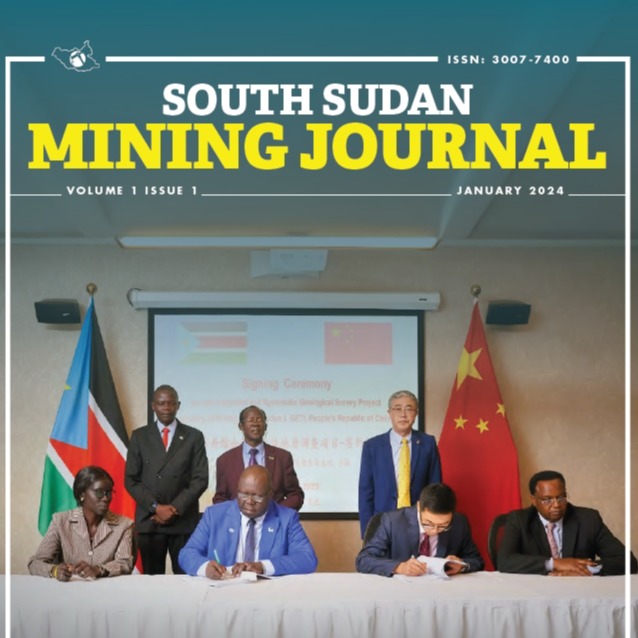
Table of content Introduction…………………………………………………………………………………………………………………………………………………………………………………………………………………4 What South Sudan gains by joining African MineralGeoscience Center………………………………………………………………………………………………….5 Raja County Hub of copper without roads……………………………………………………………………………………………………………………………………………………………….6 Limestone, South Sudan’s pathway to becoming regional cement producer………………………………………………………………………………………….7 Joint Operating Companies to maintain control of oil industry……………………………………………………………………………………………………………………8 How inadequate budget allocation obstructs mineral sector’s progress………………………………………………………………………………………………….9 NGO ignores victims in Tharjiath war complicity court case against Orron Energy………………………………………………………………………..11 Sinoma International to execute Kapoeta cement project this year…………………………………………………………………………………………………………13 South Sudan mulls setting up statistical office to compute mining revenue………………………………………………………………………………………..14 South Sudan Oil & Power Summit 2024: What you need to know………………………………………………………………………………………………………………16 Juba, Beijing pen historic systematic geological survey deal………………………………………………………………………………………………………………………..17 Trinity Energy reaped dividends from sixyear collaboration with Afreximbank……………………………………………………………………………..19 Why South Sudan should consider producing more fossil fuels than renewable energy………………………………………………………………21 Caltech deal disrupts Savannah Petronas acquisition process……………………………………………………………………………………………………………………22 Campaign pushes for women’s right to natural resource sharing………………………………………………………………………………………………………………23 International researchers predict bright future for South Sudan’s energy sector…………………………………………………………………………….24 LAPSSET offers hope for South Sudan’s alternative oil pipeline…………………………………………………………………………………………………………………25 Mineral wealth: South Sudan’s answer to oil depletion fears……………………………………………………………………………………………………………………….26 Oil consortia deprive South Sudan’s economy of $9 billion in tax evasion……………………………………………………………………………………………27 Oil price increase to fuel GDP growth in 2024 - AfDB……………………………………………………………………………………………………………………………………….28 South Sudan misses out among 2023 top Africa’s liquid producers……………………………………………………………………………………………………………29 GPOC on spotlight over oil waste mismanagement in Unity State……………………………………………………………………………………………………………30 Activist pushes for quick deployment of forces to ease access to mining areas…………………………………………………………………………………31 WBG Governor urges investors to explore Mangayat Hills for cement……………………………………………………………………………………………………32 Kiir seeks strengthened mineral, energy ties with Saudi Arabia…………………………………………………………………………………………………………………33 LAPSSET partner states to conduct regional refined oil market research…………………………………………………………………………………………….34 Goldleaf credited for fufilling Corporate Social Responsibilities in Luri……………………………………………………………………………………………….35 Gov’t extends CNPC mandate, emphasizing oil production increase………………………………………………………………………………………………………36 Global mining forum in quest to penetrate S.Sudan market…………………………………………………………………………………………………………………………38 South Sudan to benefit from Uganda’s 60,000 bpd refinery……………………………………………………………………………………………………………………………39 Trinity Energy to operationalise Lakes State power plant…………………………………………………………………………………………………………………………….40 Trinity Group backs green energy transition for African industrialisation at IATF…………………………………………………………………………41 Ethical considerations in mining industry………………………………………………………………………………………………………………………………………………………………42 Decade-old data unearths new perspective on Luri gold bonanza……………………………………………………………………………………………………………44 Exploration Of Groundwater Potential Zones Using Electrical Resistitvity Method A Case Study At Billinyang Village, Central Equatoria State, Republic Of South Sudan……………………………………………………………….45 Gov’t seeks ‘visionary’ companies to invest in precious metals, transition minerals……………………………………………………………………….50 Unauthorised offices closed over illegal nonoil revenue collection in Nimule…………………………………………………………………………………….51
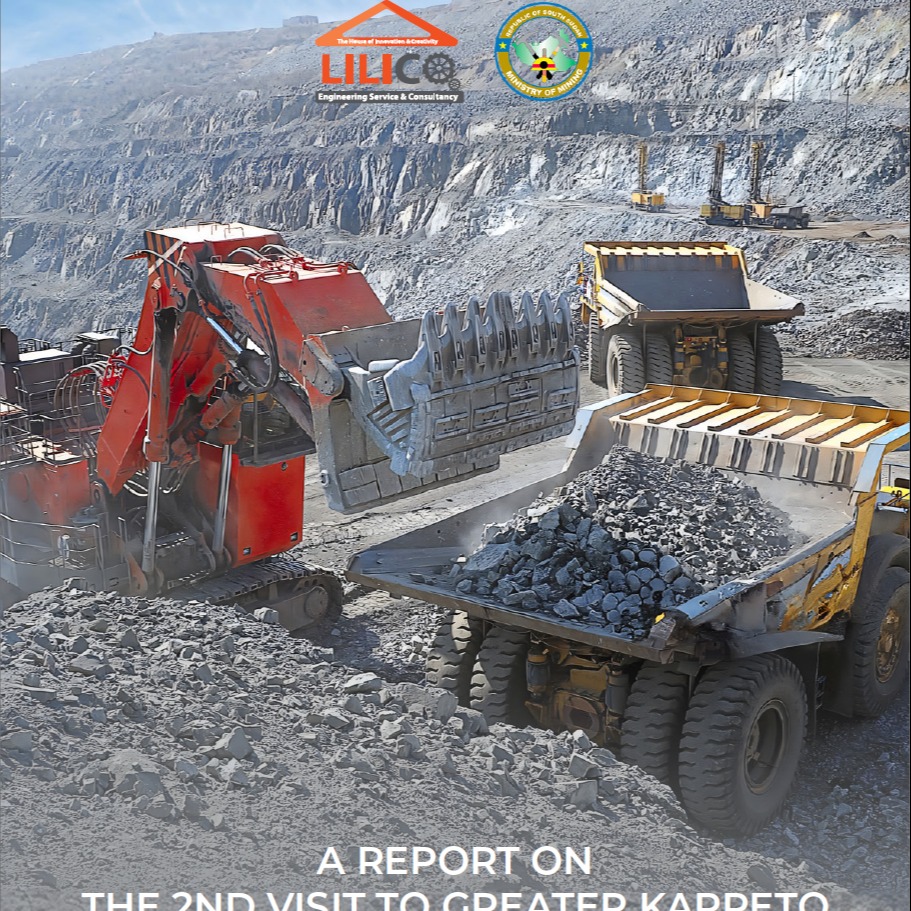
A REPORT ON THE SECOND VISIT TO GREATER KARPETO ARTISANAL MINING AREAS, LOBONOK PAYAM, JUBA COUNTY | 2015
The Directorate of Geological Survey organized a second field visit to Greater Karpeto Boma, Lobonok Payam on the invitation of the Payam Director. It took 3 days starting on the 10th - 12th November ,2015. The team was led by the Director General of Geological Survey and was made up of 13 personnel who composed of Geologist, Security personnel and other Support Staff.